Does decaf have caffeine?
Yes, a little. The FDA says an 8 oz cup of decaf typically has 2 to 15 mg, against about 95 mg in a regular coffee. That’s a tenth or less, so a decaf after dinner is fine for almost everyone.
“Decaf” sounds like “no caffeine”, and people who are cutting down sometimes worry they’ve been fooled. For nearly everyone the trace that’s left doesn’t change anything. It only adds up if you drink a lot of it, or you’re counting every milligram.
We’d use decaf as the swap that keeps the habit and drops the dose. The mug after dinner, the second cup at the office and the coffee with dessert can all be decaf, and your night will barely notice. Decaf is a lot like alcohol-free beer. There’s a trace left, and it only shows up if you drink plenty of it.
How much caffeine is in decaf?
Decaffeinating takes most of the caffeine out of the green beans before they’re roasted, but not all of it, and how much is left varies a lot.
| Decaf | Caffeine | Measured by |
|---|---|---|
| Brewed decaf, 8 oz | 2 to 15 mg | FDA |
| Coffee-shop decaf, 16 oz | 0 to 13.9 mg, across 10 shops | 2006 lab test |
| Decaf espresso from one chain | 3.0 to 15.8 mg a shot | 2006 lab test |
| Regular brewed coffee, 8 oz | 95 mg | USDA |
In that 2006 test, one shop’s decaf had no caffeine the researchers could detect. Decaf espresso shots from a single chain ranged five times over, from 3.0 to 15.8 mg. Same chain, same order.
Is decaf at night OK?
Yes. Take the top of the FDA’s range, 15 mg, at 8pm. About 11 mg is left when you fall asleep at 11pm, a third of what a can of Coke starts with. A regular 8 oz coffee at the same time would leave about 70 mg, more than an espresso’s worth.
When decaf adds up
Five decafs a day at the top of the range come to about 75 mg, still less than one regular coffee. That’s no problem for most adults, whose line is 400 mg a day.
In pregnancy the line is under 200 mg a day, by ACOG’s guidance, and caffeine also leaves the body more slowly late in pregnancy. A decaf counts as 2 to 15 mg there, small enough that switching your afternoon cups to decaf is one of the easiest ways to stay under (caffeine in pregnancy).
Use it to cut down
Swapping a coffee for a decaf drops about 80 to 90 mg in one move, which is why it’s one of the swaps in the step-down plan. You keep the cup, the taste and the routine, and lose almost all the caffeine. How to quit caffeine without a headache has the full plan.
2 to 15 mg
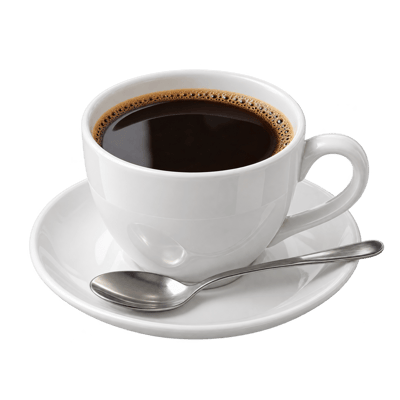
Decaf coffee, 8 oz. FDA: typically 2 to 15 mg in an 8 oz cup. We count the top. One at 3pm still leaves about 5 mg at an 11pm bedtime.
When should I stop?
When you fall asleep at 11:00pm
83 mgA measured cost
You'll fall asleep with about a cup of coffee in you.
- Brewed coffee, 8 oz95 mg
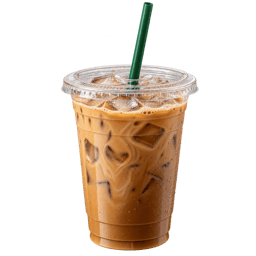 Brewed coffee, 16 oz190 mg
Your last drink, a 16 oz coffee at 3:00pm
- Under 40 mg at sleep
- by 8:10am
- Under 80 mg
- by 2:45pm
The full clock, with the band, 3am and the table by drink.
6 sources
- US Food and Drug Administration, Spilling the Beans: How Much Caffeine Is Too Much? Content current as of August 28, 2024fda.gov
- McCusker RR and others, Caffeine content of decaffeinated coffee, Journal of Analytical Toxicology, 2006pubmed.ncbi.nlm.nih.gov
- USDA FoodData Central, SR Legacy: brewed coffee (171890), espresso (171891), brewed black tea (173227) and brewed green tea (171917)fdc.nal.usda.gov
- American College of Obstetricians and Gynecologists, Committee Opinion No. 462: Moderate Caffeine Consumption During Pregnancy, August 2010, reaffirmed 2026acog.org
- Knutti R, Rothweiler H, Schlatter C, The effect of pregnancy on the pharmacokinetics of caffeine, Archives of Toxicology Supplement, 1982pubmed.ncbi.nlm.nih.gov
- Antonio J and others, Common questions and misconceptions about caffeine supplementation: what does the scientific evidence really show? Journal of the International Society of Sports Nutrition, 2024doi.org