Is caffeine healthy?
On this page
Yes. For most adults a few cups of coffee or tea a day is healthy, and the caffeine in them makes you sharper and faster. In study after study with hundreds of thousands of people, coffee and tea drinkers live as long as people who skip them, or longer. The real risks are in what comes with the caffeine, like sugar, unfiltered coffee and energy drinks, and in when and how much you have.

What we’d do
Drink coffee or tea if you enjoy it. The big studies look best at about three to four cups of coffee or two to three of tea a day, and the FDA says 400 mg a day isn’t generally linked to negative effects in healthy adults.
Keep it close to black, and use a paper filter if you drink a lot. The syrup, the whipped cream and the energy drink are where the trouble starts, and coffee brewed without a paper filter, like French press, can raise your LDL cholesterol.
Have the big cups in the morning and one small cup after lunch, because half of every cup is still in you 5 hours later. The cutoff clock works out the latest time for yours.
Your own energy comes first
Caffeine works by blocking adenosine, the signal that builds up the longer you’re awake and makes you feel tired. The adenosine keeps building underneath, and only sleep clears it (what caffeine actually does). So if you want to, and if you can, start with the energy your body makes on its own, which means 7 hours of sleep or more, daylight soon after you wake up and a short walk when the afternoon dips. Then have coffee or tea on top, if you like it, and get your caffeine from them before pills, pouches or energy drinks, since the health results come from the drinks. How to have more energy without caffeine has what works and how much.
The drink itself
Mostly good news
What comes with it
Where most of the risk is
When and how much
The rest of it
Why does caffeine have a bad name?
For a long time it looked guilty. In the NIH-AARP study of 402,260 Americans aged 50 to 71, the coffee drinkers at first seemed more likely to die. Then the researchers noticed the coffee drinkers also smoked more. Once they adjusted for smoking, the result flipped, and the more coffee people drank, the lower their risk of dying over 13 years.
The World Health Organization’s cancer agency classed coffee as “possibly carcinogenic” in 1991. In 2016 a group of 23 scientists went through more than 1,000 studies and moved it down to “not classifiable”. They found no conclusive evidence that coffee causes cancer, and lower risks of liver cancer and cancer of the lining of the womb in coffee drinkers.
Caffeine is also a drug you can feel. Skip it and you get a headache, have too much and your hands shake, and energy drinks make the news. It’s easy to assume something you feel that strongly must be costing you.
What the big studies found
Three to four cups a day, against none
- Dying of any cause17% lower
- Dying of heart disease or stroke19% lower
- Getting heart disease15% lower
- Getting any cancer (most against least)18% lower
- Type 2 diabetes, at 3 cups21% lower
In 2017 researchers in Southampton and Edinburgh pulled together 201 meta-analyses on coffee, covering 67 different health outcomes. Coffee went with benefit far more often than harm. The biggest drop in risk came at three to four cups a day, with a 17% lower risk of dying from any cause and 19% lower from heart disease and stroke. Coffee drinkers also had less type 2 diabetes, liver disease and several cancers.
Decaf drinkers did well too, which points past the caffeine. In the UK Biobank, 498,134 people were followed for 10 years, and decaf and instant coffee drinkers had lower death rates as well. In the diabetes studies, each daily cup of caffeinated coffee went with 9% lower risk and each cup of decaf with 6%. Coffee is a cup of plant compounds, and caffeine is one of them.
Tea looks much the same. In the UK Biobank, people who drank two or more cups of tea a day had a 9 to 13% lower risk of dying over 11 years than people who drank none.
These are studies that watch people, so they can’t prove the coffee did it. Coffee drinkers might differ in ways nobody measured. But the results have held in North America, Europe and Asia, after adjusting for smoking, and in people who never smoked. Is coffee healthy? and is tea healthy? have the details and the limits.
It makes you better at things
Caffeine really does make you sharper. A 2016 review found that doses from about 40 mg, less than half a small coffee, to about 300 mg improve alertness, attention, vigilance and reaction time. Above about 200 mg it also helps physical performance, from endurance to sprints to strength.
Sport noticed. Caffeine was banned in competition from 1984 to 2004, and an umbrella review of 21 meta-analyses in 2020 found it improves endurance, strength, muscle endurance, power, jumping and speed, with the biggest effect on endurance.
In 2023 researchers in San Francisco ran a rare randomized test of everyday coffee. They gave 100 adults heart monitors, step counters and glucose sensors, then texted them each morning for two weeks, at random, to drink coffee or avoid caffeine. On coffee days people walked 1,058 more steps. They also slept 36 minutes less. Caffeine for training and focus has the doses for your weight.
Where the real risks are
The sugar. A 12 oz can of Coca-Cola has 34 mg of caffeine, about a third of a coffee, and 39 g of sugar. The FDA’s Daily Value for added sugar is 50 g, so one can is most of a day’s limit. A 2025 study of 46,000 Americans found that black coffee, and coffee with no more than about half a teaspoon of sugar and a tablespoon of half-and-half, went with a 14% lower risk of death. Coffee with a lot of added sugar and fat showed no such link.
Unfiltered coffee. Coffee beans carry an oil called cafestol that raises LDL cholesterol. Drip coffee through a paper filter has almost none of it. French press, Turkish and boiled coffee let it through, and trials found that unfiltered coffee raised total and LDL cholesterol while filtered coffee barely did.
The filter is the difference
Espresso is in the middle. It’s made without a paper filter, but the cup is small, so a shot has about 1.5 mg of cafestol against 3.5 for a French press. In Norway researchers followed 508,747 people for 20 years. Filtered coffee went with a lower risk of dying than no coffee at all, and unfiltered coffee with a smaller benefit, or none at all for men. If you drink a lot of coffee and your cholesterol is high, switching to paper filter coffee is an easy change.
Very hot drinks and pure powder. The WHO’s cancer agency found that drinks above 65°C (149°F) probably cause cancer of the esophagus, and said “it is the temperature, rather than the drinks themselves” that seems responsible. Let it cool for a few minutes. And keep pure caffeine powder out of the house. The FDA says less than half a teaspoon is around 1,200 mg, enough to cause seizures.
Where the real risks are goes through each one with its numbers.
When and how much
The other half of the risk is timing and dose. Caffeine halves about every 5 hours, so it’s still in you long after the buzz is gone. An 8 oz coffee at 3pm still leaves about 35 mg in you at 11pm, the same as a can of Coke. A 16 oz coffee at the same time leaves twice that.
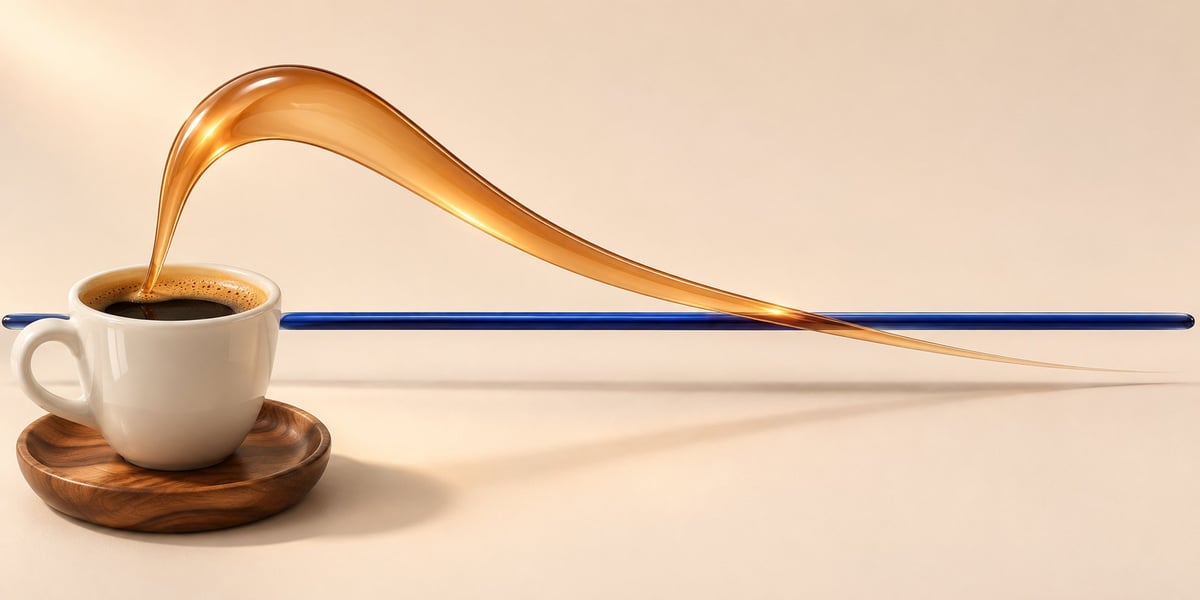
The size of the cup changes your night more than the time on the clock. In a 2025 trial, about one cup of coffee changed nothing the researchers could measure even 4 hours before bed, while about four cups still cut deep sleep 12 hours before.
That’s why we’d keep big cups, strong cans and pre-workout scoops for the morning, and have one small cup after lunch. When to stop, by the size of the cup has the latest time for every drink, and what caffeine does to your night explains why you can’t feel the cost.
For the day as a whole, the FDA says 400 mg isn’t generally linked to negative effects in healthy adults, about two to three 12 oz coffees. Pregnancy is the exception in the big coffee studies, where high intake went with lower birth weight and pregnancy loss, and the US advice is under 200 mg a day. For ages 12 to 18 it’s at most 100 mg and no energy drinks. How much is too much has every line.
People also clear caffeine at very different speeds, anywhere from 1.5 to 9.5 hours for half. The pill and pregnancy slow it down, and smoking speeds it up. A DNA test can tell you about your CYP1A2 gene, but in the UK Biobank coffee went with lower death rates whatever people’s caffeine genes said. Your genes and caffeine has what a gene test can and can’t tell you.
How we got here
Caffeine in nine moments
- 141 BCEEmperor Jing of Han is buried near Xi’an with tea, the oldest tea anyone has found.
- 1400sSufis in Yemen drink coffee through their night prayers, and the plant is farmed there at scale.
- 1650England’s first coffeehouse opens at the Angel in Oxford. London gets one in 1652.
- 1668In New Amsterdam, now New York, coffee starts replacing beer at breakfast.
- 1780sTea becomes cheap enough for nearly everyone in England, and boiling the water for it lowers deaths.
- 1819Goethe hands the chemist Friedlieb Runge some coffee beans. Within months Runge isolates caffeine.
- 1886The first Coca-Cola is served at Jacobs’ Pharmacy in Atlanta.
- 1987Red Bull launches in Austria, based on a Thai drink called Krating Daeng.
- TodayMore than 80% of American adults have caffeine, about 165 to 230 mg a day on average, mostly from coffee.
People have brewed caffeine for more than 2,000 years, and in Europe and America the drink it pushed aside was often beer. In New York, coffee started replacing breakfast beer around 1668. In 18th century England tea got cheap enough for nearly everyone, and since tea means boiling the water, deaths fell most in the places with the worst water. The history of caffeine tells the whole story, from a Han emperor’s tomb to Red Bull.
Questions people ask
- Can I have an espresso after dinner? A single shot at 9pm leaves about 53 mg in you at 11pm.
- Is a Coke with dinner too much caffeine? The caffeine is small. The 39 g of sugar is the bigger cost.
- Can I drink tea at night? A black tea at 8pm leaves about 34 mg at 11pm, the caffeine in a can of Coke.
- Is it bad to drink coffee on an empty stomach? The big studies found no link to ulcers or reflux.
- Does coffee raise your blood pressure? For a few hours, and much less once it’s a habit.
- Why does coffee make you poop? It wakes up your colon within minutes, even decaf.
- Are caffeine pouches safe? For an adult using one at a time, mostly. A strong one is 200 mg, two coffees.
- Are caffeine pills bad for you? Not at a normal dose. A pill is usually 200 mg, and easy to stack.
The numbers in one table
| What we’d go by | Why | |
|---|---|---|
| Coffee a day | About 3 to 4 cups | Where the big studies found the biggest drop in risk |
| Tea a day | 2 cups or more | The UK Biobank’s lowest risk started at 2 cups |
| Sugar | Close to none in your coffee | The 2025 US study found the benefit only in black or barely sweetened coffee |
| The brew | A paper filter if you drink a lot | It keeps out the cafestol that raises cholesterol |
| Your last big cup | A 16 oz coffee by about 11am for an 11pm bedtime | 190 mg needs about 12 hours to fall under 40 mg |
| Your last small cup | An 8 oz coffee by about 4pm, an espresso or a tea by about 7pm | Small drinks still need 4 hours |
| A whole day | Under 400 mg, under 200 if pregnant, 100 at most for teens | The FDA, ACOG and pediatricians |
What brought you here?
People come to caffeine for about a dozen reasons. Pick yours.
- Is my coffee keeping me up?Probably not at falling asleep. The cost is in deep sleep once you’re out.
- Is coffee good or bad for me?Good for most adults, best at three to four cups, close to black.
- I’m tired all the time.Sleep first, then daylight and a short walk. Caffeine only hides it.
- How much is in my drink?The size of the cup matters more than the brand.
- Can I have an espresso at night?One at 9pm leaves about 53 mg at 11pm, and a decaf one about 13.
- I train or need to focus.3 to 6 mg per kg an hour before, early enough to be gone by bedtime.
- I’m pregnant or breastfeeding.Under 200 mg a day in pregnancy, and it lasts much longer late on.
- My teenager drinks energy drinks.At most 100 mg a day for teens, and no energy drinks at all.
- I want to cut down or quit.A quarter every 3 days, the latest cup first, skips most of the headache.
- My DNA test says I’m a slow metabolizer.Coffee went with lower death rates whatever the genes said.
- I’m on the pill, or I just quit smoking.Both make the same coffee last about 1.5 times as long.
- Pouches, pills or pre-workout?The same caffeine, often in bigger doses. Check the milligrams.
Every part of the guide
- The health studies. Is coffee healthy?, is tea healthy?, where the real risks are and caffeine for training and focus.
- Your own energy. How to have more energy without caffeine, the natural route that comes before any cup.
- How it works in you. What caffeine actually does, how long caffeine lasts, what makes yours faster or slower and your genes and caffeine.
- Your cup and your night. The cup sets the dose, what caffeine does to your night, when to stop, by the size of the cup, how much is too much and cutting down without the headache.
- The story. The history of caffeine, and the myths, starting with is coffee bad for you?
- To pass on. Caffeine studies, tips and resources, each in one line you can copy.
The simple plan
If you’re a healthy adult who likes coffee or tea and wants to sleep well, this is all of it, in order.
- Get your energy the natural way first. If you want to, and if you can, sleep 7 hours or more, get daylight soon after you wake up and take a short walk when the afternoon dips. Caffeine hides tiredness, and only sleep clears it. How to have more energy without caffeine.
- If you like coffee or tea, have it. About three to four cups of coffee or two to three of tea a day is where the big studies look best. Get your caffeine from the drinks before pills, pouches or energy drinks.
- Keep it close to black. Little or no sugar, and a paper filter if you drink a lot of coffee or your LDL is high.
- Know your cup in milligrams. An 8 oz coffee is about 95 mg, a 16 oz about 190, and a strong can or a scoop can be more. Caffeine in your drink has every size.
- Go by the size of the cup. Big cups, strong cans and scoops in the morning, and anything after lunch kept to one small cup. For an 11pm bedtime that’s a 16 oz coffee by about 11am, an 8 oz by about 4pm, and an espresso or a tea by about 7pm. The cutoff clock works out yours.
- Keep the day under the line. Under 400 mg for most adults, under 200 if you’re pregnant, and at most 100 for teens, with no energy drinks. How much is too much.
- Track it next to your sleep. Photograph or type your coffee, tea or can and Gyroscope One finds the caffeine in it, then shows your daily total and your last cup next to your bedtime and your sleep. More on tracking it in Gyroscope.
- Test it on your own nights. One week as you are now and one with your last cup earlier or smaller. On a ring or watch, compare deep sleep and time awake. Without one, write down each morning how long you took to fall asleep and how rested you feel. Is my coffee keeping me up? builds the plan around your drink and bedtime.
- Cut down slowly if you want to stop. About a quarter every 3 days, the latest cup first, and decaf keeps the cup. The step-down planner dates it for you.
- Ask a doctor about your own line if you’re pregnant, take a daily medicine such as fluvoxamine, or caffeine makes your heart race or skip.
25 sources
- Poole R and others, Coffee consumption and health: umbrella review of meta-analyses of multiple health outcomes, BMJ, 2017doi.org
- Freedman ND and others, Association of coffee drinking with total and cause-specific mortality, New England Journal of Medicine, 2012doi.org
- Loftfield E and others, Association of coffee drinking with mortality by genetic variation in caffeine metabolism: findings from the UK Biobank, JAMA Internal Medicine, 2018doi.org
- Inoue-Choi M and others, Tea consumption and all-cause and cause-specific mortality in the UK Biobank, Annals of Internal Medicine, 2022doi.org
- Ding M and others, Caffeinated and decaffeinated coffee consumption and risk of type 2 diabetes: a systematic review and a dose-response meta-analysis, Diabetes Care, 2014doi.org
- Marcus GM and others, Acute effects of coffee consumption on health among ambulatory adults (CRAVE), New England Journal of Medicine, 2023doi.org
- International Agency for Research on Cancer, IARC Monographs evaluate drinking coffee, mate, and very hot beverages, press release 244, June 15, 2016iarc.who.int
- McLellan TM, Caldwell JA, Lieberman HR, A review of caffeine's effects on cognitive, physical and occupational performance, Neuroscience and Biobehavioral Reviews, 2016doi.org
- Grgic J and others, Wake up and smell the coffee: caffeine supplementation and exercise performance, an umbrella review of 21 published meta-analyses, British Journal of Sports Medicine, 2020doi.org
- Diel P, Caffeine and doping: what have we learned since 2004, Nutrients, 2020doi.org
- Zhou B and others, Coffee consumption and mortality among US adults (NHANES 1999 to 2018), Journal of Nutrition, 2025, summary by Tufts Universitynow.tufts.edu
- The Coca-Cola Company, Coca-Cola Original Taste, product details and FAQ, checked 2026-11-15coca-cola.com
- US Food and Drug Administration, Added sugars on the Nutrition Facts label, checked 2026-11-15fda.gov
- Urgert R and others, Levels of the cholesterol-elevating diterpenes cafestol and kahweol in various coffee brews, Journal of Agricultural and Food Chemistry, 1995doi.org
- Jee SH and others, Coffee consumption and serum lipids: a meta-analysis of randomized controlled clinical trials, American Journal of Epidemiology, 2001doi.org
- Tverdal A and others, Coffee consumption and mortality from cardiovascular diseases and total mortality: does the brewing method matter?, European Journal of Preventive Cardiology, 2020doi.org
- US Food and Drug Administration, Spilling the beans: how much caffeine is too much?, content current as of 2024-08-28fda.gov
- Antonio J and others, Common questions and misconceptions about caffeine supplementation: what does the scientific evidence really show?, Journal of the International Society of Sports Nutrition, 2024doi.org
- Gardiner C and others, Dose and timing effects of caffeine on subsequent sleep: a randomized clinical crossover trial, Sleep, 2025doi.org
- Ukers WH, All About Coffee, 1922, Project Gutenberggutenberg.org
- Antman FM, For want of a cup: the rise of tea in England and the impact of water quality on mortality, Review of Economics and Statistics, 2023doi.org
- Reichert CF, Deboer T, Landolt HP, Adenosine, caffeine, and sleep-wake regulation: state of the science and perspectives, Journal of Sleep Research, 2022doi.org
- US Centers for Disease Control and Prevention, About Sleep, May 15, 2024cdc.gov
- Gardiner C and others, The effect of caffeine on subsequent sleep: a systematic review and meta-analysis, Sleep Medicine Reviews, 2023doi.org
- US National Library of Medicine, DailyMed, Vivarin (caffeine) tablet label, updated May 1, 2026dailymed.nlm.nih.gov