Caffeine for training and focus
On this page
Caffeine is one of the few supplements that really works. It reliably improves exercise performance at 3 to 6 mg per kg of body weight, taken about an hour before you start, and as little as 2 mg per kg may be enough. Doses around 9 mg per kg bring a lot of side effects and no extra benefit. The catch is your night. An average 254 mg pre-workout scoop at 5pm still leaves about half of itself in you at 11pm.
What we’d do
Use the smallest dose that works for you, starting around 2 to 3 mg per kg. Train in the morning or early afternoon and take your full dose. If you train in the evening, take half a scoop or none, and save the full dose for race day or a test. Read the label, because pre-workouts vary a lot and some hide the caffeine in a blend.
If you remember three things
- 3 to 6 mg per kg works, and 2 may be enough. For 180 lb that’s about 245 to 490 mg, or about 165 mg at the low end.
- More isn’t better. 9 mg per kg brings side effects and no extra gain.
- Evening scoops reach bedtime. A full scoop before a 6pm session leaves about 123 mg at 11pm, and half a scoop about 61.
Does caffeine really improve performance?
Yes, and sport took it seriously enough to ban it. Caffeine was a banned substance in competition from 1984 until January 1, 2004, when the World Anti-Doping Agency moved it to a watch list instead. Athletes can use it freely now.
In 2020 researchers pulled together 21 meta-analyses on caffeine and exercise. Caffeine improved aerobic endurance, muscle strength, muscle endurance, power, jumping and speed, and the effect was generally bigger for endurance than for short bursts. Most of the people in those studies were young men, so women and older adults are less well tested.
It works on your brain too. A 2016 review found that doses from about 40 mg, less than half a small coffee, up to about 300 mg improve alertness, attention, vigilance and reaction time. The effects on memory and on judgment and decision making were less consistent. Above about 200 mg, roughly 3 mg per kg, the physical effects show up too, from time trials to the sprints of team sports.
You can see it in ordinary life. In a 2023 trial in San Francisco, 100 adults were told at random each morning to drink coffee or skip caffeine, and on coffee days they walked 1,058 more steps. They also slept 36 minutes less, which is the trade this page is about.

Why do people take so much?
The pre-workout aisle sells caffeine by the heaping scoop. When researchers checked the labels of the 100 top-selling pre-workout products in 2019, 86% had caffeine, at an average of 254 mg a serving, about two and a half 8 oz coffees in one shaker. A typical product listed about 18 ingredients, and nearly half of all the ingredients sat in proprietary blends with no amount on the label.
The logic people follow is that if some caffeine helps, more helps more. The research says it levels off. The International Society of Sports Nutrition’s 2021 position stand found 3 to 6 mg per kg improves performance consistently, that the lowest dose that works may be about 2 mg per kg, and that very high doses like 9 mg per kg come with a high rate of side effects and aren’t needed.
The whole thing in one picture
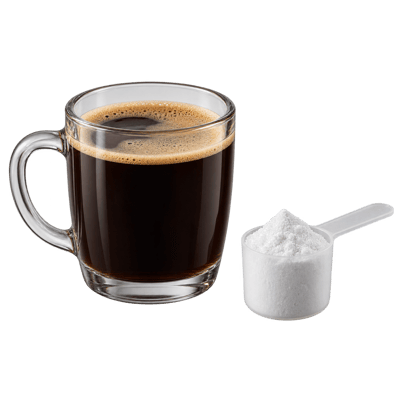
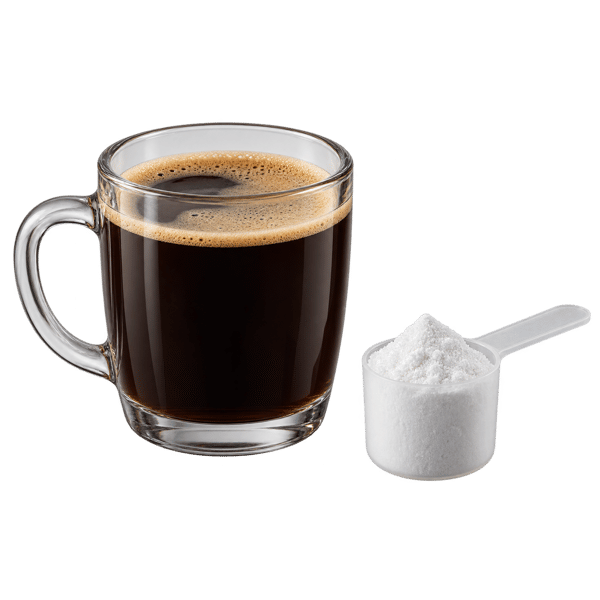
A 254 mg scoop is about two and a half cups of coffee. You wouldn’t drink two and a half coffees at 5pm and expect to sleep well at 11. People do exactly that with a scoop, because it comes in a shaker and tastes like candy.
Who tested it first
In 1906 and 1907 two Cambridge psychologists, William Rivers and Harald Webber, tested caffeine on their own muscle fatigue. They used themselves as the subjects, gave themselves caffeine or a dummy without knowing which, and kept their diets the same, including what they drank. The 2021 position stand calls them “remarkable well-designed studies”, double-blind and placebo-controlled more than a century ago. Larger trials across different sports followed through the 1940s and after.
The dose for your weight
| Your weight | 2 mg per kg, may be enough | 3 to 6 mg per kg, the studied range | 9 mg per kg, side effects |
|---|---|---|---|
| 130 lb (59 kg) | About 120 mg | About 175 to 355 mg | About 530 mg |
| 150 lb (68 kg) | About 135 mg | About 205 to 410 mg | About 610 mg |
| 180 lb (82 kg) | About 165 mg | About 245 to 490 mg | About 735 mg |
| 200 lb (91 kg) | About 180 mg | About 270 to 545 mg | About 815 mg |
The 2019 label study pointed out that the average 254 mg scoop sits near the low end of the effective range for a 70 kg (154 lb) person. For a lot of people, one and a half to two 8 oz coffees, about 140 to 190 mg, is enough to test the low end. The most commonly used timing is 60 minutes before you start. Caffeine gum may need less waiting.
Caffeine helped most consistently in endurance exercise, by a moderate to large amount, and the position stand found it helps both trained and untrained people. It also found people differ a lot, in both the benefit and the side effects, including on sleep.
What the evening scoop costs
| Scoop | Taken at | Left at 11pm |
|---|---|---|
| Full, 254 mg | 7am | About 31 mg |
| Full, 254 mg | Noon | About 61 mg |
| Full, 254 mg | 5pm, for a 6pm session | About 123 mg |
| Full, 254 mg | 6pm, for a 7pm session | About 141 mg |
| Half, 127 mg | 5pm | About 61 mg |
That’s on a 5 hour half-life. For an 11pm bedtime, the latest time for a full scoop is about 9am to stay under our 40 mg line and about 2pm to stay under 80. A half scoop moves those to about 2pm and 7pm.
The 2023 review of 24 sleep studies put a 217.5 mg pre-workout scoop at 13.2 hours before bed, which is the same kind of answer. And in the 2025 trial, 400 mg taken 12 hours before bed still cut about 21 minutes of deep sleep. The position stand describes a small study of 13 people where caffeine in the morning disturbed sleep in one of them, and caffeine at 6pm in six.
If you have to train late
Many people can only train after work. Here’s what we’d do in that case.
- Halve the scoop, or use a coffee. Half the average scoop is about 127 mg, inside the 2 mg per kg range for a lot of people.
- Take it as late as works. About 60 minutes before you start is the studied timing, so there’s nothing to gain from taking it earlier.
- Keep the full dose for days that count. A race or a test can justify a worse night. A Tuesday workout can’t.
- If you’re well trained, you may gain less in the evening. One small study of 20 men in the position stand found trained riders improved with caffeine in the morning, while only the untrained ones improved in the evening.
Who it’s not for
Pre-workouts and large caffeine doses aren’t for anyone under 18, since pediatricians advise against any energy drinks for children and teens. They aren’t for pregnancy, where ACOG’s line is under 200 mg for the whole day. If you have a heart rhythm problem or take a stimulant prescription, ask your doctor or prescriber before you use one.
Training and your body
Your genes may change how much caffeine helps you. In a 2024 review of 13 studies, it helped people with the fast version of the CYP1A2 gene most and slightly hurt the few with the slowest version, but the gap disappeared when studies with declared conflicts of interest were left out. Your genes and caffeine has the details.
Caffeine raises your daily burn a little, and tdee.guide has how little. If you’re training to lose fat, bodyfat.guide covers lifting, walking and cardio.
Your turn
The pre-workout window takes your weight, your session time and your bedtime, and gives the dose range for you, what your scoop leaves at bedtime, and the latest start for a full scoop and for half.
If you train on short nights, the scoop covers the tiredness without clearing any of it. Sleep does that, and how to have more energy without caffeine has the rest of the natural route, from daylight to a 10-minute walk.
12 sources
- Grgic J and others, Wake up and smell the coffee: caffeine supplementation and exercise performance, an umbrella review of 21 published meta-analyses, British Journal of Sports Medicine, 2020doi.org
- McLellan TM, Caldwell JA, Lieberman HR, A review of caffeine's effects on cognitive, physical and occupational performance, Neuroscience and Biobehavioral Reviews, 2016doi.org
- Diel P, Caffeine and doping: what have we learned since 2004, Nutrients, 2020doi.org
- Marcus GM and others, Acute effects of coffee consumption on health among ambulatory adults (CRAVE), New England Journal of Medicine, 2023doi.org
- Barreto G and others, Caffeine, CYP1A2 genotype, and exercise performance: a systematic review and meta-analysis, Medicine and Science in Sports and Exercise, 2024doi.org
- Guest NS and others, International society of sports nutrition position stand: caffeine and exercise performance, Journal of the International Society of Sports Nutrition, 2021doi.org
- Jagim AR, Harty PS, Camic CL, Common ingredient profiles of multi-ingredient pre-workout supplements, Nutrients, 2019doi.org
- Gardiner C and others, The effect of caffeine on subsequent sleep: a systematic review and meta-analysis, Sleep Medicine Reviews, 2023doi.org
- Gardiner C and others, Dose and timing effects of caffeine on subsequent sleep: a randomized clinical crossover trial, Sleep, 2025doi.org
- Antonio J and others, Common questions and misconceptions about caffeine supplementation: what does the scientific evidence really show?, Journal of the International Society of Sports Nutrition, 2024doi.org
- American Academy of Child and Adolescent Psychiatry, Caffeine and children, Facts for Families No. 131, April 2026aacap.org
- American College of Obstetricians and Gynecologists, Committee Opinion No. 462: Moderate caffeine consumption during pregnancy, Obstetrics and Gynecology, 2010pubmed.ncbi.nlm.nih.gov