
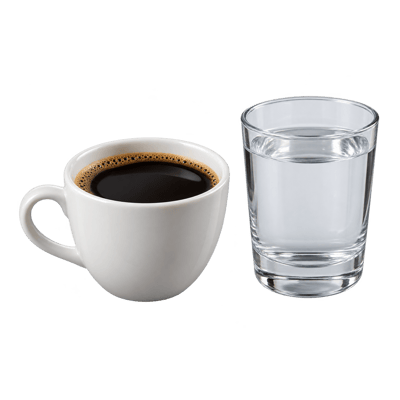
Does coffee dehydrate you?
Short answerNo
No. In a 2014 study of 50 men who drink coffee every day, four cups a day for three days kept them just as hydrated as the same amount of water. Their body water, their urine and their blood markers came out the same. Coffee counts toward your fluids. Only very large doses, above about 500 mg, raise urine output for a while.
What we’d do
Count your coffee as part of what you drink in a day. Drink water when you’re thirsty, and don’t add a glass for every cup to make up for it. If you care about caffeine, it’s your sleep that the cups cost, not your fluids.
If you remember three things
- Four cups a day hydrated like water. That was in a 3 day trial of 50 regular coffee drinkers.
- Only big doses push extra urine. More than about 500 mg at once can raise urine output for a while.
- Regular drinkers adapt. The effect is much smaller in people who have coffee or tea every day.
Why people believe it
Coffee makes you pee, and caffeine gets called a diuretic, a substance that makes the kidneys pass more water. Put those together and it sounds like every cup takes away more fluid than it gives.
A big glass of water makes you pee too. What counts is whether you finish the day with more fluid in you or less, and most of a mug of coffee is water.
The old studies that made the case gave large doses, often to people who’d gone without caffeine first. A 2003 review proposed that 300 mg or more, two to three cups, would raise urine output in people who had been “deprived of caffeine for a period of days or weeks”. That’s not how most people drink it.
What the study found
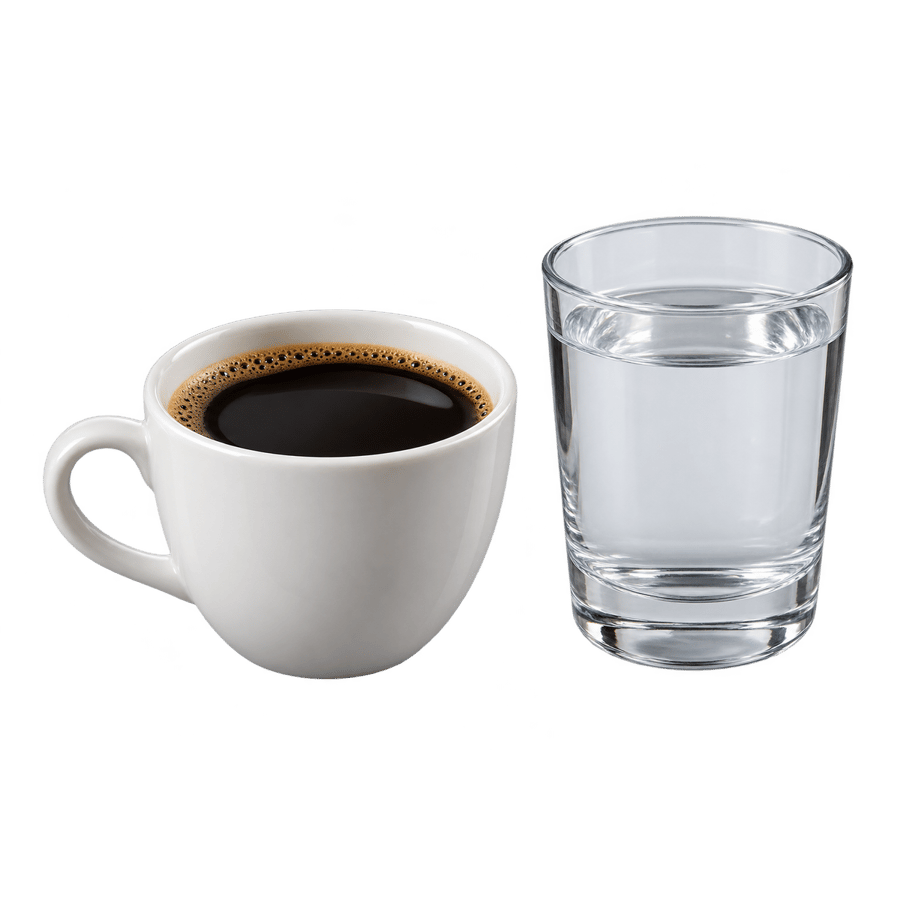
Coffee against water, 3 days each
50 men who drink 3 to 6 cups a day. Killer, Blannin and Jeukendrup, University of Birmingham, 2014
Four 200 mL (about 7 oz) cups a day, with 4 mg of caffeine per kg of body weight in all, or the same amount of water. Total body water came out at 51.5 kg against 51.4. Daily urine was 2,409 mL against 2,428. No blood or urine marker of hydration differed.
Men only, all regular coffee drinkers. Funded by a coffee industry science body, and one author worked for PepsiCo.
The researchers measured each man’s total body water before and after each trial with a tracer, heavy water. They also controlled food, drink and exercise for both trials, and tested the men’s blood for caffeine to make sure they’d drunk the coffee. On the 4 mg per kg dose, a 180 lb man would get about 330 mg a day.
A 2024 review of the research came to the same place. Moderate daily doses, about 3 mg per kg or roughly 250 to 300 mg, don’t appear to raise urine volume in people used to caffeine, and normal coffee drinking “has little to no effect on fluid balance”.
The best case for it
Big doses do something. The 2024 review found that 6 mg per kg or more, over about 500 mg, may raise urine output for a while. If you rarely have caffeine and drink a very strong coffee, a CELSIUS or a full pre-workout scoop, you may well pee more that afternoon. A 2003 review quoted in it described “a profound tolerance to the diuretic and other effects of caffeine” in people who drink tea or coffee regularly.
More detail: the funding
The 2014 study was paid for by the Institute for Scientific Information on Coffee, a non-profit backed by the coffee industry, which the authors said had no role in the design, analysis or writing. At the time of publication, one author was employed by PepsiCo. The design was a crossover, so each man was compared with himself, and the measures were lab tests rather than questionnaires.
2 sources
- Killer SC, Blannin AK, Jeukendrup AE, No evidence of dehydration with moderate daily coffee intake: a counterbalanced cross-over study in a free-living population, PLOS ONE, 2014doi.org
- Antonio J and others, Common questions and misconceptions about caffeine supplementation: what does the scientific evidence really show?, Journal of the International Society of Sports Nutrition, 2024doi.org