Does dark roast have more caffeine?
Short answerNo
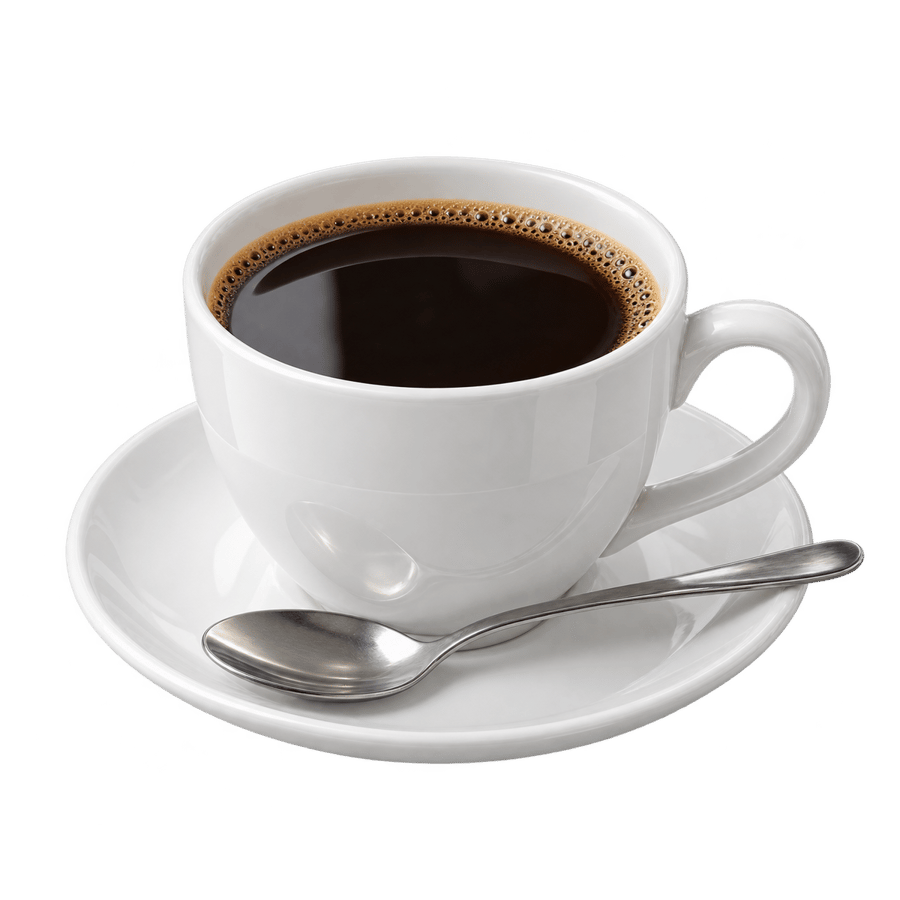
No. When coffee is brewed the same way, dark roasts come out with a little less caffeine than light and medium roasts, not more. In a 2024 lab study, caffeine peaked around light to medium roasts and fell as the roast got darker. The bold, bitter taste of a dark roast comes from the roasting, not from extra caffeine.
What we’d do
Pick the roast you like the taste of. If you want less caffeine, change the size of the cup or switch to decaf, since the roast only moves it a little. A 16 oz light roast and a 16 oz dark roast are both about two cups of coffee for your night.
If you remember three things
- Dark tastes stronger, and has no more caffeine. The flavor comes from roasting.
- Brewed the same way, dark roasts came out a little lower. Two lab studies point the same way.
- Your cup size moves caffeine far more than the roast. A 16 oz cup is twice an 8 oz one, whatever the beans.
Why people believe it
In everyday language, dark means strong. A dark roast tastes smoky and bitter, and it seems obvious that the strongest-tasting coffee has the most caffeine in it.
Toast is darker than bread and tastes stronger, and nobody thinks it has more wheat in it. The heat changed the color and the flavor. Roasting does the same to coffee beans, and the caffeine doesn’t go up along the way.
What the studies found
Five roasts, three brew times
Two Ethiopian coffees, 90 brews in all. Lindsey and colleagues, Berry College, Georgia, 2024
Brewed the same way, dark roasts generally came out lower in caffeine than light and medium roasts. Caffeine in a 10 minute brew peaked in roasts that had lost about 14 to 16% of their weight, light to medium, then fell for every darker roast.
One brewer and two coffees. Shop coffee varies far more than this.
Medium against dark, as cold brew
Four coffees. Fuller and Rao, Thomas Jefferson University, 2017
Cold brew made from medium roast coffee had more caffeine than cold brew made from dark roast.
A cold brew study, so the roast result was a side finding.
The 2024 team found that darker beans were more porous, and that the amount of coffee that dissolved into the water fell once a roast had lost more than about 12 to 14% of its weight. They called the drop in caffeine in the darkest roasts “indirect but convincing” support for the idea that some caffeine turns straight to vapor and escapes late in a long, hot roast.
The best case for it
There’s one way dark roast can come out ahead. When the 2024 team compared brews where the same share of the coffee had dissolved, dark roasts had more caffeine. Dark beans lose weight in the roaster, so a scoop or a gram of dark roast is a little different from a scoop or a gram of light, and how much ends up in your cup depends on how you measure and brew.
Either way the difference is small next to the other things that change your dose. In a 2003 lab test, coffee-shop coffees ran from 58 to 259 mg a serving, and the same drink from the same shop measured 259 to 564 mg on six days in a row. Going from 8 oz to 16 oz doubles it.
More detail: what a light, medium and dark roast are
A roast is set by how hot and how long the beans are cooked, and the beans lose weight as compounds break down or cook off. The 2024 study measured each batch’s color, density and weight loss, and its roasts ran from light to very dark. The 95 mg per 8 oz used across this site is USDA’s value for brewed coffee, with no roast named.
4 sources
- Lindsey ZR and others, Caffeine content in filter coffee brews as a function of degree of roast and extraction yield, Scientific Reports, 2024doi.org
- Fuller M, Rao NZ, The effect of time, roasting temperature, and grind size on caffeine and chlorogenic acid concentrations in cold brew coffee, Scientific Reports, 2017doi.org
- McCusker RR, Goldberger BA, Cone EJ, Caffeine content of specialty coffees, Journal of Analytical Toxicology, 2003pubmed.ncbi.nlm.nih.gov
- USDA FoodData Central, brewed coffee (FDC 171890), SR Legacyfdc.nal.usda.gov