How much caffeine is in a cup of coffee?
On this page
About 95 mg in an 8 oz cup of brewed coffee, by the USDA’s numbers. But most cups aren’t 8 oz. Brewed 16 oz coffees from coffee shops averaged 188 mg in one lab test, and a 20 oz cup comes to about 237 mg.
“A cup of coffee” sounds like a unit, so people count cups. Two cups a day sounds moderate, and it might be. Or it might be two 20 oz cups from a coffee shop, which is about five of the 8 oz cups most caffeine charts use.
We’d count ounces. Know the size of your usual cup before you decide how many you have, or how late the last one can be. It’s like a slice of pizza. A slice from a small pie and a slice from an extra large pie are both “a slice”.
How much caffeine is in each size?
The caffeine is dissolved in the coffee, so it goes up with every ounce. The USDA puts brewed coffee at 40 mg per 100 g, about 12 mg an ounce.
| Cup | Caffeine | Left at 11pm if you drink it at 3pm |
|---|---|---|
| 8 oz | 95 mg | 35 mg |
| 12 oz | 142 mg | 52 mg |
| 16 oz | 190 mg | 70 mg |
| 20 oz | 237 mg | 87 mg |
| Single espresso, 1 oz | 63 mg | 23 mg |
| Decaf, 8 oz | 2 to 15 mg | under 6 mg |
The last column uses the average half-life of 5 hours. Yours can be faster or slower.
Why the same coffee comes out so different
In 2003, a team of researchers bought coffees from coffee shops and measured the caffeine in each one. The regular coffees ran from 58 to 259 mg a serving. Then they bought the same drink from the same shop on six days in a row. It measured anywhere from 259 to 564 mg, so the strongest day was more than twice the weakest, from the same order.
The amount of grounds, the roast and the brewing method all change how much comes out. In lab tests, dark roasts brewed the same way came out a little lower than light ones, and coarse cold brew came out higher than hot coffee. You can’t see any of that in the cup, so your safest guess is the size.
Is espresso stronger?
By the ounce it is, about five times as strong. But a single shot has about 63 mg, less than an 8 oz mug of drip coffee, because a shot is one ounce and a mug is eight (how much caffeine is in a shot of espresso?).
How many cups is too many?
The FDA says 400 mg a day isn’t generally linked to negative effects in healthy adults, and puts that at about two to three 12 oz cups of coffee. That’s four 8 oz cups, or two 16 oz ones. One 20 oz cup is already more than half of it. How much caffeine is too much? has the lines for pregnancy, breastfeeding and teens.
How late can your last cup be?
Your cutoff depends on the size of the cup. For an 11pm bedtime, an 8 oz coffee by about 4pm leaves under 40 mg when you fall asleep, the lower of our two bedtime lines. A 16 oz coffee has to be in by about 11am to do the same. When should I stop drinking coffee before bed? has the times for every drink, and the drinks tool shows yours to scale.
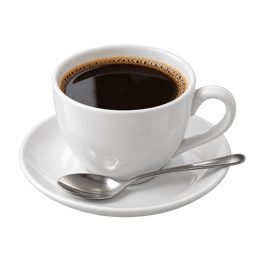
95 mg
Brewed coffee, 8 oz. USDA FoodData Central 171890: 40 mg per 100 g, and an 8 oz cup is 237 g. One at 3pm still leaves about 35 mg at an 11pm bedtime.
When should I stop?
When you fall asleep at 11:00pm
83 mgA measured cost
You'll fall asleep with about a cup of coffee in you.
- Brewed coffee, 8 oz95 mg
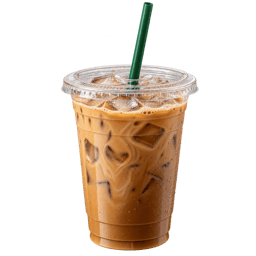 Brewed coffee, 16 oz190 mg
Your last drink, a 16 oz coffee at 3:00pm
- Under 40 mg at sleep
- by 8:10am
- Under 80 mg
- by 2:45pm
The full clock, with the band, 3am and the table by drink.
6 sources
- USDA FoodData Central, SR Legacy: brewed coffee (171890), espresso (171891), brewed black tea (173227) and brewed green tea (171917)fdc.nal.usda.gov
- McCusker RR, Goldberger BA, Cone EJ, Caffeine content of specialty coffees, Journal of Analytical Toxicology, 2003pubmed.ncbi.nlm.nih.gov
- US Food and Drug Administration, Spilling the Beans: How Much Caffeine Is Too Much? Content current as of August 28, 2024fda.gov
- Lindsey ZR and others, Caffeine content in filter coffee brews as a function of degree of roast and extraction yield, Scientific Reports, 2024doi.org
- Fuller M, Rao NZ, The Effect of Time, Roasting Temperature, and Grind Size on Caffeine and Chlorogenic Acid Concentrations in Cold Brew Coffee, Scientific Reports, 2017doi.org
- Antonio J and others, Common questions and misconceptions about caffeine supplementation: what does the scientific evidence really show? Journal of the International Society of Sports Nutrition, 2024doi.org